
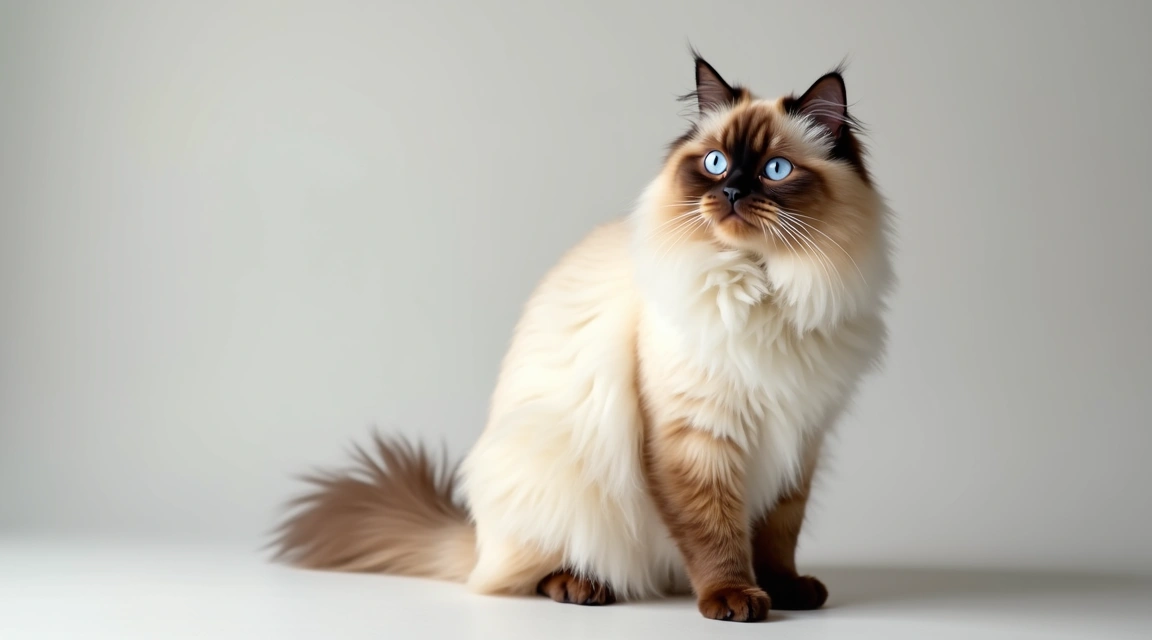
The Himalayan cat breed stands out with its striking blue eyes, luxurious coat, and gentle personality. Many prospective owners wonder about the relationship between Himalayan cats and Persian cats, since these breeds share numerous physical and behavioral traits. Understanding this connection helps you make informed decisions about which breed fits your lifestyle and care capacity.
The Himalayan breed emerged from deliberate crossbreeding programs in the mid-20th century. Breeders combined Persian cats with Siamese cats to create a feline with the Persian body type and coat texture, paired with the Siamese pointed color pattern. This careful breeding resulted in a cat that displays Persian characteristics with colorpoint markings on the face, ears, paws, and tail.
For readers interested in exploring other distinctive feline varieties, our Cat Breeds section offers detailed profiles of popular and rare breeds.
The Persian-Himalayan Breed Connection
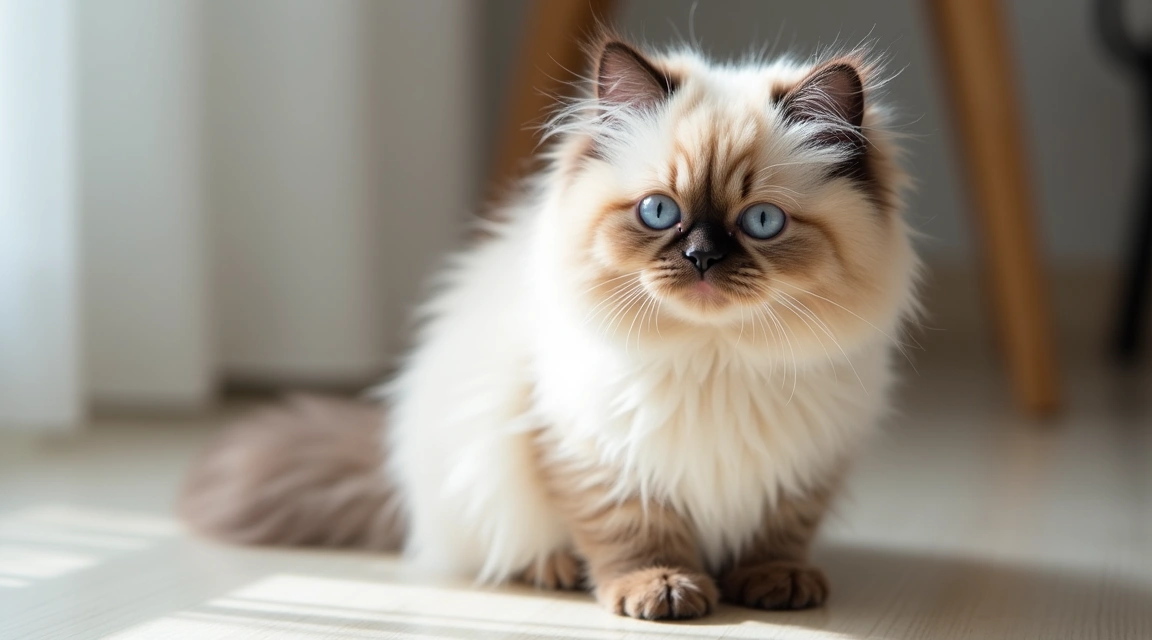
The Himalayan cat is essentially a colorpoint Persian. Major cat registries take different positions on classification: some recognize the Himalayan as a distinct breed, while others categorize it as a color division within the Persian breed. The Cat Fanciers’ Association (CFA), for example, considers Himalayans a variety of Persian rather than a separate breed.
Physically, Himalayans and Persians share nearly identical body structures. Both breeds display a cobby, compact body with short legs, a broad chest, and substantial bone structure. The head shape follows the same brachycephalic pattern, featuring a flat face, short nose, full cheeks, and rounded skull. Their ears sit low and far apart, with a wide base and rounded tips.
The primary distinction lies in coat color and pattern. Traditional Persians come in solid colors, bicolors, tabbies, and many other patterns. Himalayans exhibit exclusively colorpoint patterns, where the body remains lighter while the points (face mask, ears, legs, paws, and tail) display darker coloring. Common Himalayan point colors include seal, blue, chocolate, lilac, flame (red), and cream.
Both breeds require identical grooming routines due to their long, dense double coats. The texture remains soft and silky, prone to matting without regular maintenance. Temperamentally, Persians and Himalayans share calm, gentle, affectionate personalities. They prefer quiet environments and form strong bonds with their human families.
Step-by-Step Guide to Understanding Himalayan Breed Characteristics
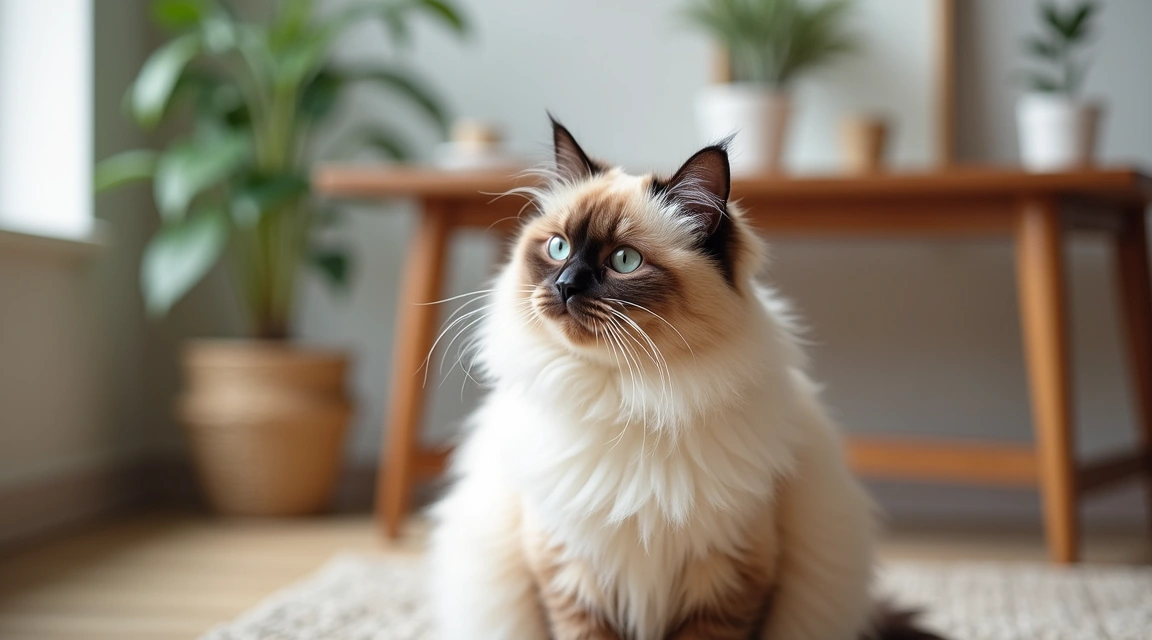
Follow these steps to identify and appreciate the unique features of the Himalayan cat breed.
Step 1: Examine the Head and Face Structure
Look at the cat’s facial profile. Himalayans display a flat face with minimal nasal projection, matching the Persian standard. The nose sits between the eyes rather than protruding forward. The eyes are large, round, and vivid blue—never any other color in purebred Himalayans.
Caution: The flat facial structure can contribute to breathing difficulties and tear duct issues. Check that the nostrils appear open and the cat breathes quietly. Excessive snorting or labored breathing may indicate anatomical problems requiring veterinary assessment.
Step 2: Assess the Coat Pattern and Texture
Run your hand through the coat. The fur should feel soft and flow easily between your fingers. The colorpoint pattern develops gradually—kittens are born nearly white, with points darkening over several months. Full color development takes one to two years.
Examine the contrast between body color and points. High-quality Himalayans show clear distinction, with the body remaining several shades lighter than the points. The body color typically ranges from creamy white to pale fawn, depending on the point color.
Caution: Dense coats mat quickly without daily brushing. Neglected coats develop painful tangles close to the skin, sometimes requiring professional grooming or veterinary sedation for removal. Establish grooming habits from kittenhood to prevent these issues.
Step 3: Observe Body Type and Build
Notice the overall body structure. Himalayans carry a stocky, low-to-ground build with substantial weight for their size. Adult males typically weigh between seven and twelve pounds, while females range from six to ten pounds. The body feels muscular and solid when lifted.
The legs appear short relative to body length, with large, round paws. The tail is short, thick, and covered in abundant fur, carried low and slightly curved rather than upright.
Caution: The compact body structure makes Himalayans prone to weight gain. Monitor food portions carefully and provide opportunities for gentle play. Obesity increases risks for joint problems and diabetes in this breed.
Step 4: Evaluate Temperament and Behavior
Spend time observing the cat’s activity level and social behavior. Himalayans are notably calm and quiet compared to active breeds. They prefer lounging in comfortable spots over climbing and jumping. When they do play, sessions are brief and gentle.
These cats thrive on human companionship without being demanding. They enjoy sitting near or on their owners and accept handling when approached gently. Unlike highly vocal breeds, Himalayans vocalize sparingly, with soft, sweet voices when they do speak.
Caution: The quiet, sedentary nature means health problems may go unnoticed. Watch for subtle changes in eating, litter box habits, or social interaction. Himalayans often hide discomfort, so schedule regular veterinary checkups to catch issues early.
Step 5: Check for Breed-Specific Health Considerations
Himalayans inherit health vulnerabilities common to Persian cats. The flat face structure can cause brachycephalic airway syndrome, making breathing less efficient, especially in heat or during stress. The shortened nasal passages also contribute to tear overflow, creating brown staining around the eyes.
Polycystic kidney disease (PKD) occurs in some Persian and Himalayan lines. Responsible breeders screen breeding cats using genetic tests or ultrasound to reduce PKD transmission. Ask breeders about PKD testing in their program before purchasing a kitten.
Dental overcrowding develops due to the compressed jaw structure, requiring more frequent dental care than in cats with normal facial proportions. Hypertrophic cardiomyopathy (HCM), a heart condition, also appears with higher frequency in Persian-type breeds.
Caution: Never purchase a Himalayan kitten without health documentation. Reputable breeders provide genetic test results, veterinary examination records, and pedigree papers. Avoid breeders who cannot produce these documents or pressure you to buy quickly.
Step 6: Understand Daily Care Requirements
Himalayan ownership requires significant daily commitment. Set aside ten to fifteen minutes each day for grooming. Use a metal comb to work through the coat section by section, starting at the skin and combing outward. Pay special attention to areas where mats form quickly: behind the ears, under the legs, and around the tail base.
Clean the face daily using a soft, damp cloth. Wipe tear stains gently from the corners of the eyes outward. Some owners find tear stain removers helpful, but plain water works for routine cleaning.
Provide a shallow litter box with low sides for easy entry, since short legs make high-sided boxes challenging. Clean the box daily—Himalayans are fastidious and may avoid dirty boxes.
Caution: Skipping grooming sessions creates a cascade of problems. Small mats multiply quickly, eventually forming a solid pelt against the skin that traps dirt, causes pain, and prevents air circulation. Once matting becomes severe, professional removal under sedation may become necessary.
Common Mistakes When Choosing or Caring for Himalayans
Many new owners underestimate the grooming commitment. Seeing a well-maintained Himalayan at a show or in photos does not reveal the daily effort required. Prospective owners should honestly assess whether they can commit to lifelong daily grooming before bringing a Himalayan home.
Another frequent error involves expecting high activity levels. People familiar with active breeds sometimes feel disappointed by the Himalayan’s sedentary nature. This breed suits owners who prefer calm, quiet companions. If you want an athletic cat that plays fetch or learns tricks, consider more active breeds.
Some owners mistakenly believe that professional grooming every few months replaces daily home care. Professional grooming provides periodic deep cleaning and sanitary trims, but it cannot substitute for daily brushing. The coat mats too quickly for a monthly or bimonthly grooming schedule to maintain coat health.
Ignoring early signs of breathing difficulty represents another critical mistake. Owners sometimes assume that snorting and snoring are normal breed characteristics. While Himalayans do breathe more audibly than breeds with normal facial structure, significant breathing effort, open-mouth breathing, or reluctance to play warrants veterinary examination.
First-time owners occasionally purchase kittens from backyard breeders or pet stores without health screening. Kittens from unscreened parents carry higher risks for genetic diseases like PKD. The money saved on purchase price often gets spent many times over on veterinary care for preventable conditions.
Some people select Himalayans hoping for a hypoallergenic cat due to confusion between the Himalayan cat breed and the Himalayan region. Himalayan cats are not hypoallergenic. They produce the same allergenic proteins found in all cats, and their long coats may actually trap and distribute more dander than short-coated breeds.
Living With a Himalayan: Practical Considerations
Himalayans adapt well to indoor living and actually thrive best as indoor-only cats. Their long coats collect debris outdoors, their flat faces make them vulnerable to extreme temperatures, and their gentle nature leaves them defenseless against predators or aggressive animals.
These cats do well in multi-pet households when introduced properly, though they prefer peaceful environments. Loud, chaotic homes with young children may stress them. They typically coexist peacefully with calm dogs and other gentle cats.
Budget for ongoing care costs beyond initial purchase price. Quality cat food formulated for long-haired or Persian-type breeds costs more than generic options. Annual veterinary checkups, vaccinations, and dental care add up. Professional grooming every few months, grooming supplies, and potential health issues require financial preparation.
Lifespan typically ranges from nine to fifteen years with proper care, though some individuals live longer. The commitment spans over a decade of daily grooming and attentive health monitoring.
Summary: Making the Right Choice
The Himalayan cat breed offers tremendous rewards for owners who appreciate its gentle temperament and stunning appearance. The close relationship to the Persian breed means these cats share nearly identical care needs, health considerations, and personality traits, distinguished primarily by their colorpoint pattern.
Success with this breed requires honest assessment of your lifestyle and capabilities. Daily grooming is non-negotiable, not optional. The calm, quiet nature suits some households perfectly while disappointing others expecting active, playful cats. Health vulnerabilities require financial preparation and attentive monitoring.
When these factors align with your preferences and resources, a Himalayan makes a devoted, affectionate companion. Their serene presence and stunning looks create a rewarding relationship for owners who meet their needs consistently. Choose carefully, prepare thoroughly, and commit fully to provide a Himalayan with the specialized care this unique breed requires.