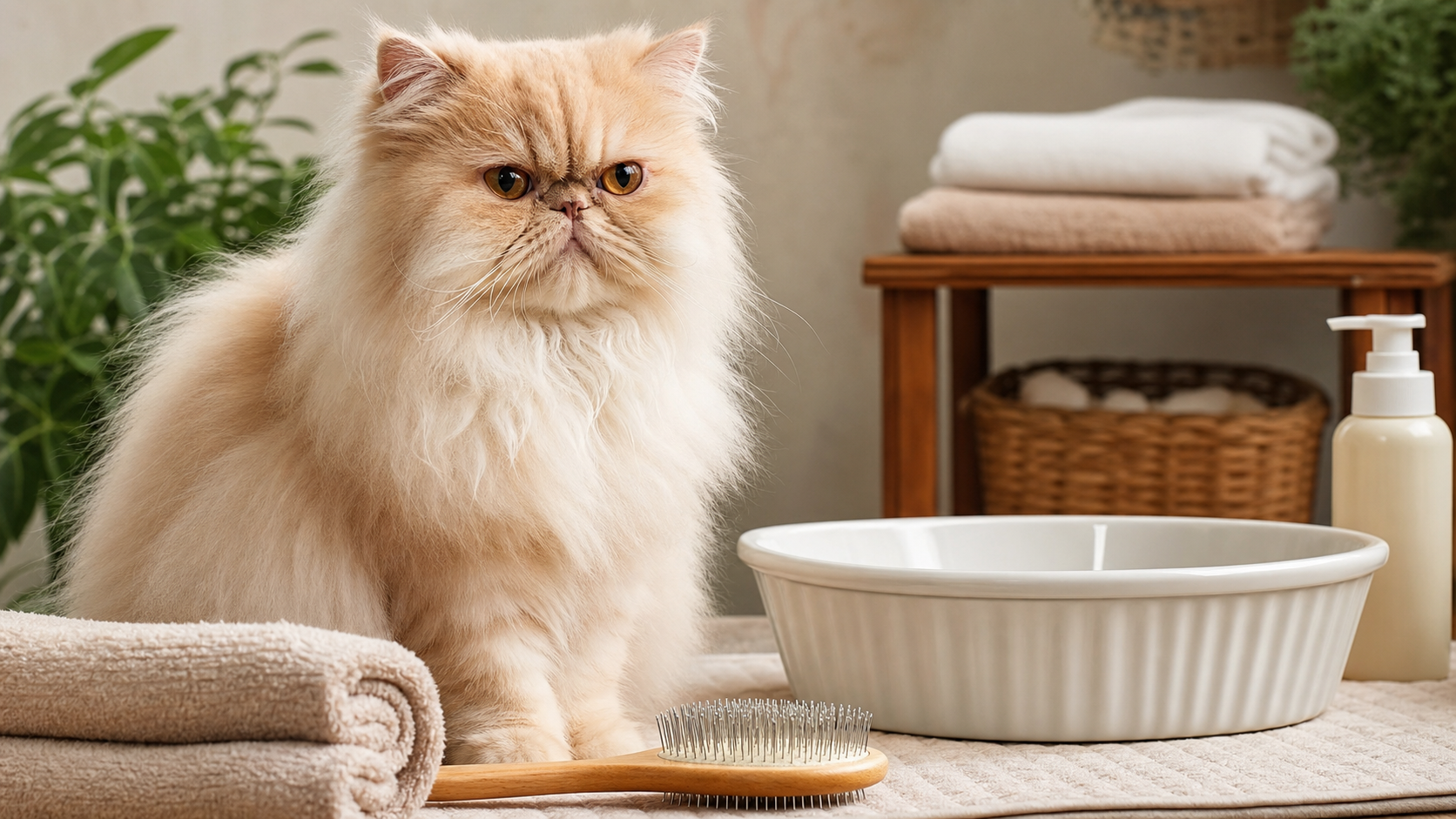
I’ve been a Persian cat owner for over eight years, and if there’s one lesson I learned the hard way, it’s that bathing these gorgeous furballs requires a completely different approach than bathing other cats. My first attempt ended with water everywhere, a traumatized kitty hiding under the bed for hours, and me questioning all my life choices. But after refining my technique and talking to my vet and professional groomers, I’ve developed a system that works beautifully. Today, I want to share everything I’ve learned about bathing Persian cats so you can avoid the mistakes I made and keep your fluffy companion clean, healthy, and happy.
Persian cats need regular baths more than most other breeds because of their luxurious long coats that easily collect dirt, oils, and debris. While some cats can go their entire lives with minimal bathing, Persians typically benefit from a bath every 4-6 weeks, depending on their lifestyle and coat condition. The key is making bath time as stress-free as possible for both of you.
The Advantages of Regular Persian Cat Bathing
Let me start with why you should embrace bathing your Persian rather than avoiding it. The benefits go far beyond just having a nice-smelling cat around the house.
First and foremost, regular baths prevent matting, which is the number one grooming challenge for Persian owners. Those long, silky hairs tangle easily, and once mats form close to the skin, they can cause painful pulling, skin irritation, and even infection. A proper bath with the right shampoo loosens dirt and makes brushing afterward significantly easier. I’ve noticed my cat’s coat stays manageable for much longer after a good bath and thorough dry-down.
Bathing also reduces shedding and dander, which is a game-changer if anyone in your household has allergies. My partner used to sneeze constantly around our Persian until we established a consistent bathing routine. The difference was remarkable within just a few weeks.
Another major benefit is controlling tear staining, that reddish-brown discoloration around Persian cats’ eyes. Because of their flat faces, Persians are prone to excessive tearing, and regular facial cleaning during bath time helps keep those stains under control. I use a damp cloth with warm water around the eyes before the actual bath, and it’s made a visible difference.
Finally, bath time becomes an opportunity for a full health check. When you’re washing your cat, you’ll naturally notice any lumps, skin issues, parasites, or unusual sensitivity that might otherwise go undetected under all that fur. I once discovered a small cut on my cat’s belly during a bath that I would never have found otherwise.
The Challenges and Downsides You Should Know
Now for the reality check—bathing a Persian cat isn’t all sunshine and roses. There are legitimate challenges, and pretending otherwise does nobody any favors.
The biggest issue is the time commitment. Bathing a Persian properly isn’t a quick 10-minute job. Between pre-bath brushing, the actual washing, thorough rinsing, and the extensive drying process, you’re looking at 45 minutes to an hour and a half. The drying phase alone takes forever because you absolutely cannot leave a Persian’s thick undercoat damp—it can lead to skin problems and that dreaded wet dog smell that never quite goes away.
Most Persians also really don’t enjoy water, which means you’ll likely face resistance. My cat has learned to tolerate baths, but she’s never enthusiastic about them. Some cats get genuinely stressed, which raises the question of whether the benefits outweigh the psychological cost. If your cat becomes extremely anxious despite your best efforts, you might need to space out baths more or seek professional grooming help.
There’s also a learning curve with technique. Using the wrong water temperature, getting water in their ears or eyes, or failing to rinse thoroughly can cause problems ranging from ear infections to skin irritation. I once didn’t rinse well enough, and my cat developed itchy skin from leftover shampoo residue. It took a week and a vet visit to sort out.
The cost factor matters too. You’ll need cat-specific shampoo (never use human products), possibly a conditioner, a good blow dryer or pet dryer, special brushes, and towels you don’t mind dedicating to cat duty. The initial investment can easily run $50-100, plus ongoing product replacements.
Who Should Follow This Persian Cat Bathing Guide
This guide is perfect for new Persian cat owners who want to establish good grooming habits from the start. If you’ve just brought home a Persian kitten, starting a bathing routine early helps them acclimate to the process while they’re young and adaptable. My breeder gave me my Persian at 12 weeks already familiar with baths, which made my job infinitely easier.
Experienced cat owners transitioning to their first Persian also benefit from specialized guidance. Bathing a Persian is genuinely different from bathing a domestic shorthair. The coat density, the facial structure, and the grooming needs require adjustments to techniques you might already know.
This guide is also valuable for Persian owners who’ve been avoiding baths or struggling with the process. If you’ve been trying to manage your cat’s coat with brushing alone and finding it increasingly difficult, or if you’ve had a few disastrous bath attempts, these tips will help you troubleshoot and improve.
However, if your Persian has severe anxiety issues, a heart condition, or is very elderly, consult your vet before attempting home baths. Professional groomers with experience handling anxious cats might be a better option. Likewise, if you’re physically unable to safely restrain and dry a wet, potentially squirming cat, there’s no shame in outsourcing this task.
Frequently Asked Questions
How often should I actually bathe my Persian cat?
Most Persian cats do well with a bath every 4-6 weeks, though this varies based on individual factors. Indoor-only Persians with lighter-colored coats might stretch to every 6-8 weeks, while cats that go outdoors or have particularly oily coats might need bathing every 3-4 weeks. Watch for signs like a greasy feel to the coat, visible dirt, or that unmistakable “dirty cat” smell. I’ve settled into a 5-week schedule for my girl, which keeps her coat in optimal condition without overdoing it.
Can I use human shampoo on my Persian cat in a pinch?
Absolutely not, and I cannot stress this enough. Cats have a different skin pH than humans (they’re more neutral while human skin is acidic), so human shampoos can strip protective oils and cause irritation, dryness, and even allergic reactions. Baby shampoo isn’t safe either despite popular belief. Invest in a quality cat-specific shampoo formulated for long-haired breeds. I learned this the expensive way after a “quick” bath with my own shampoo resulted in weeks of my cat scratching herself raw and a hefty vet bill.
What’s the biggest mistake people make when bathing Persian cats?
The number one mistake is inadequate drying. People underestimate how much water a Persian’s double coat holds and how long it takes to dry completely. If you stop when the surface feels dry, the undercoat is probably still damp, creating a perfect environment for hot spots, fungal issues, and that awful mildewy smell. Always blow-dry on a low, cool setting while brushing through the coat until it’s completely dry to the skin. This is the most tedious part of the process, but skipping it undermines everything else you’ve done right. Plan for at least 30-45 minutes of careful drying time.