
Creating a green, vibrant indoor environment while keeping your feline companions safe requires careful plant selection. According to the ASPCA Animal Poison Control Center, which handles over 180,000 cases annually, plants account for approximately 10% of all pet poisoning calls. For cat owners who love both houseplants and their furry friends, understanding which greenery is truly safe can prevent emergency veterinary visits and keep your home both beautiful and pet-friendly.
Cats are naturally curious creatures, and their instinct to nibble on plants stems from evolutionary behavior. While outdoor cats might chew grass to aid digestion or induce vomiting to expel hairballs, indoor cats often turn to houseplants for similar reasons. The challenge is that many popular ornamental plants contain toxic compounds that can cause reactions ranging from mild gastrointestinal upset to severe organ damage. Fortunately, numerous attractive, easy-to-care-for plants pose no threat to cats, allowing you to create an indoor garden that’s both aesthetically pleasing and completely safe.
Understanding Plant Toxicity in Cats
Before exploring safe options, it’s important to understand how plant toxicity affects cats. Feline physiology differs significantly from human and even canine metabolism. Cats lack certain liver enzymes that break down plant compounds, making them particularly vulnerable to substances that might be harmless to other species. According to veterinary toxicology studies published in the Journal of Veterinary Emergency and Critical Care, cats are especially sensitive to saponins, glycosides, and oxalate crystals found in common houseplants.
Common symptoms of plant poisoning in cats include excessive drooling, vomiting, diarrhea, lethargy, loss of appetite, and difficulty swallowing. More severe cases involving plants like lilies can cause kidney failure within 24-48 hours. A 2019 study from the University of California Davis School of Veterinary Medicine found that even small amounts of certain toxic plants—sometimes just two or three chewed leaves—can trigger serious medical emergencies requiring intensive care.
The ASPCA maintains a comprehensive database of both toxic and non-toxic plants, updated regularly based on veterinary poison control data. This resource, compiled from over three decades of case reporting, represents the gold standard for pet plant safety information. Cross-referencing any new plant addition against this database should be standard practice for responsible cat owners.
Top Safe Indoor Plants for Cat Households
Several plant families offer completely safe options that thrive indoors while posing zero toxicity risk to cats. The following plants have been verified as non-toxic through extensive veterinary testing and decades of observational data.
Spider Plants (Chlorophytum comosum) top the list for good reason. These resilient plants not only survive in various light conditions but actually benefit from the occasional nibble. Spider plants contain no toxic compounds, though they do produce mild hallucinogenic effects similar to catnip in some cats. Research from Cornell University’s College of Veterinary Medicine confirms that while cats may become attracted to spider plants, ingestion causes no harm beyond potential mild digestive upset from excessive consumption of plant fiber.
Boston Ferns (Nephrolepis exaltata) provide lush, cascading greenery perfect for hanging baskets beyond cat reach—though even if your cat does access them, these ferns are completely safe. They require consistent moisture and indirect light, making them ideal for bathrooms or humid environments. According to the National Garden Bureau, Boston ferns have been cultivated indoors for over 150 years without a single documented case of pet toxicity.
Areca Palms (Dypsis lutescens) bring a tropical feel to any room while remaining entirely cat-safe. These palms can grow quite large indoors, sometimes reaching six to seven feet, and they effectively filter indoor air. NASA’s Clean Air Study identified areca palms as one of the top air-purifying plants, removing formaldehyde, xylene, and toluene from indoor environments—benefits that complement their pet-safety profile.
Prayer Plants (Maranta leuconeura) offer striking foliage with distinctive patterns and a unique characteristic: their leaves fold up at night, resembling hands in prayer. These plants prefer low to medium indirect light and consistently moist soil, making them excellent choices for less sunny rooms. Veterinary botanist Dr. Sarah Mitchell notes that prayer plants belong to the Marantaceae family, none of whose members contain compounds toxic to cats.
Catnip and Cat Grass deserve special mention. Not only are these plants safe, they’re actively beneficial. Catnip (Nepeta cataria) provides environmental enrichment, while cat grass (typically wheat, oat, or barley grass) offers digestive benefits and may reduce a cat’s interest in other houseplants. A 2018 study in the Journal of Feline Medicine and Surgery found that 68% of cats provided with dedicated cat grass showed decreased interest in other household plants.
Plants to Absolutely Avoid
Understanding dangerous plants is equally critical. The following species are extremely toxic to cats and should never be present in cat-accessible areas.
True Lilies (Lilium and Hemerocallis species) represent the single most dangerous plant family for cats. All parts of the plant—flowers, pollen, leaves, stems, and even water from the vase—contain nephrotoxic compounds. According to the Pet Poison Helpline, which tracks over 65,000 cases annually, lily ingestion accounts for a disproportionately high percentage of fatal cat poisonings. Even exposure to lily pollen on fur, later groomed off, can cause acute kidney failure.
Sago Palms (Cycas revoluta) contain cycasin, a potent hepatotoxin. Despite their name, these aren’t true palms but cycads, and they’re extraordinarily dangerous. The ASPCA reports that ingestion of just one or two seeds can be fatal to cats, with a mortality rate exceeding 30% even with aggressive treatment.
Philodendrons and Pothos are ubiquitous houseplants that contain insoluble calcium oxalate crystals. When cats chew these plants, the needle-sharp crystals embed in mouth tissues, causing immediate intense pain, excessive drooling, and swelling. While rarely fatal, the pain is severe, and secondary complications can occur. A 2020 veterinary emergency medicine report documented that oxalate-containing plants caused 15% of all plant-related emergency visits.
Dieffenbachia (Dumb Cane) also contains calcium oxalates in particularly high concentrations. Historical records show it earned its common name because the intense swelling it causes can temporarily prevent speech in humans—effects that are even more severe in smaller animals like cats.
Creating a Cat-Safe Indoor Garden
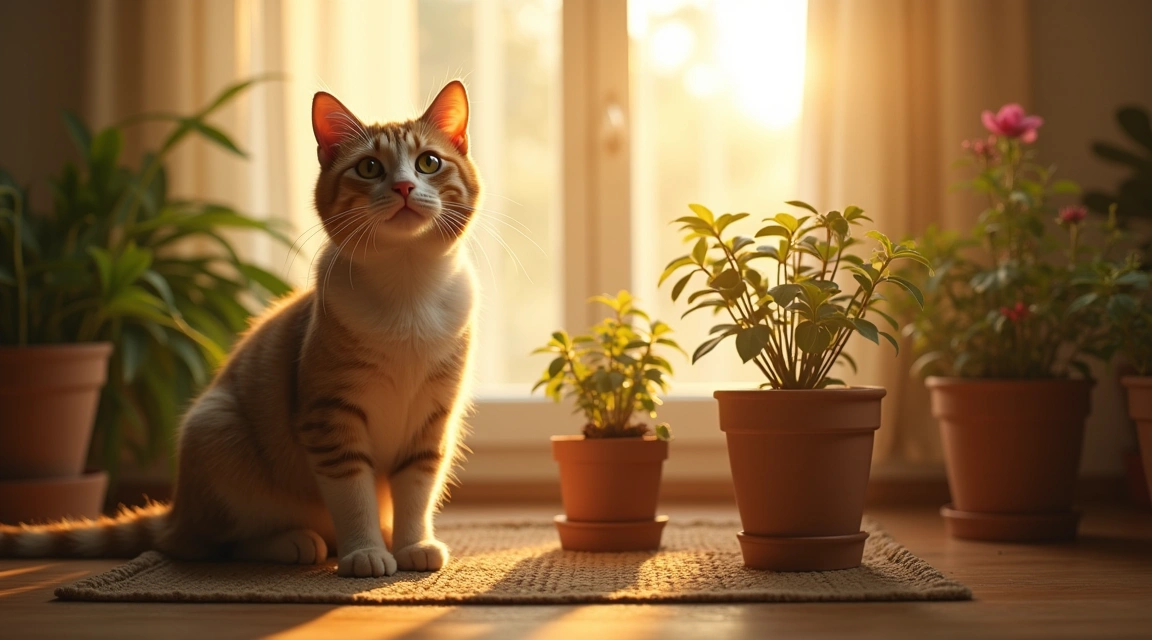
Implementing practical strategies ensures your indoor garden remains both beautiful and safe. Start by conducting a complete home audit, removing or relocating any questionable plants. Even if a plant isn’t highly toxic, prevention remains the best approach.
Consider vertical gardening solutions that place plants beyond cat reach. Wall-mounted planters, high shelving, and ceiling-hung options work well, though remember that cats are skilled climbers and jumpers. A 2017 study in Applied Animal Behaviour Science found that domestic cats can jump up to six times their body length, meaning few surfaces are truly inaccessible.
Provide attractive alternatives. Dedicated cat gardens featuring catnip, cat grass, and other safe plants can redirect your cat’s attention. Research from the American Association of Feline Practitioners shows that environmental enrichment, including safe plants to explore and nibble, reduces unwanted behaviors and improves overall feline wellbeing.
Use deterrents strategically. Citrus scents, which cats typically dislike, can be applied around plants you want to protect. Double-sided tape on pot rims, motion-activated air sprays, or even decorative barriers can discourage plant access without removing greenery entirely.
Monitor new plants carefully. Even safe plants can cause mild digestive upset if consumed in large quantities, simply due to fiber content. Watch for changes in eating behavior, litter box habits, or energy levels when introducing new plants to your home.
Emergency Preparedness and Resources
Despite precautions, accidents happen. Keep emergency contact information readily available: your regular veterinarian, the nearest 24-hour emergency veterinary clinic, the ASPCA Animal Poison Control Center (888-426-4435), and the Pet Poison Helpline (855-764-7661). Note that these poison control services typically charge consultation fees of $65-$95, but they provide expert guidance that can be lifesaving.
If you suspect plant poisoning, act quickly. If possible, identify the plant—take a photo or bring a sample to the veterinarian. Remove any plant material from your cat’s mouth, but don’t induce vomiting unless specifically instructed by a veterinarian, as some plant toxins cause more damage when regurgitated.
According to Dr. Ahna Brutlag, senior veterinary toxicologist at Pet Poison Helpline, early intervention significantly improves outcomes. “The difference between a full recovery and a tragic outcome often comes down to how quickly treatment begins,” she notes in her 2021 veterinary toxicology review. For severe toxins like lilies, treatment started within six hours of exposure offers dramatically better prognosis than delayed care.
Comprehensive Plant Safety Reference
| Plant Name | Safety Status | Light Requirements | Water Needs | Special Notes |
|---|---|---|---|---|
| Spider Plant | Safe | Indirect light | Moderate | May attract cats; hallucinogenic but harmless |
| Boston Fern | Safe | Indirect light | High | Needs humidity; excellent air purifier |
| Areca Palm | Safe | Bright indirect | Moderate | Grows large; removes toxins from air |
| Prayer Plant | Safe | Low to medium | Moderate-high | Leaves fold at night; decorative foliage |
| African Violet | Safe | Bright indirect | Moderate | Blooms year-round with proper care |
| Bamboo Palm | Safe | Low to bright | Moderate | Tolerates low light; air purifying |
| Catnip | Safe (beneficial) | Bright light | Moderate | Provides enrichment; may attract cats |
| Cat Grass | Safe (beneficial) | Bright light | Moderate-high | Aids digestion; reduces plant nibbling |
| True Lilies | EXTREMELY TOXIC | N/A | N/A | Can cause fatal kidney failure |
| Sago Palm | EXTREMELY TOXIC | N/A | N/A | All parts poisonous; high fatality rate |
| Pothos | TOXIC | N/A | N/A | Contains calcium oxalate crystals |
| Philodendron | TOXIC | N/A | N/A | Causes severe mouth irritation |
| Dieffenbachia | TOXIC | N/A | N/A | High oxalate content; painful |
| English Ivy | TOXIC | N/A | N/A | Causes vomiting and digestive upset |
Creating a cat-safe indoor garden requires knowledge, vigilance, and thoughtful plant selection, but the result—a beautiful, healthy living space for both you and your feline companions—is well worth the effort. By choosing verified non-toxic plants, implementing smart placement strategies, providing appropriate alternatives, and maintaining emergency preparedness, you can enjoy lush indoor greenery without compromising your cat’s safety. The growing body of veterinary research makes it easier than ever to identify safe options, and resources like the ASPCA’s continuously updated plant database ensure you have access to the most current safety information. With approximately 42 million U.S. households owning cats according to the American Pet Products Association’s 2023 survey, the demand for reliable pet-safe plant guidance has never been higher—and fortunately, the selection of safe, attractive options continues to expand.