Persian cats and water don’t exactly go together like peanut butter and jelly. Anyone who’s ever tried bathing a Persian knows the drama that can unfold. But here’s the thing : their long, luxurious coats actually need regular baths to stay healthy and mat-free. So how often should you really bathe your Persian? The answer isn’t as simple as slapping a number on it.
Bathing frequency depends on your cat’s lifestyle, coat condition, and how much natural oil their skin produces. Indoor Persians with lighter coats might need baths every 4-6 weeks, while darker-coated cats or those who groom themselves more efficiently might stretch it to 6-8 weeks. The key is finding what works for your individual cat without over-bathing and drying out their skin or under-bathing and letting mats form.
Why Persian Cats Need More Frequent Baths Than Other Breeds
That gorgeous Persian coat comes with a price. Their fur is incredibly dense and long, which means it traps dirt, dander, and natural oils way more than short-haired breeds. Without regular bathing, these oils build up and create a greasy feel. You’ll notice the coat loses its fluffy texture and starts looking stringy or clumped together.
Persians also can’t groom themselves as effectively as other cats. Their flat faces make it physically harder to reach certain areas, and their dense undercoat is just too much for a tongue to handle alone. This is where we come in. Regular baths help remove loose undercoat, prevent painful matting, and keep that signature Persian fluffiness intact. Think of bathing as part of their basic maintenance, not an optional luxury.
What Most Persian Owners Actually Experience at Bath Time
Let’s be honest : not every Persian cat is going to sit calmly in the tub like a spa client. Some make sounds that resemble a haunted wind chime. Others freeze like they’ve been betrayed by their favorite human. The internet is full of videos showing Persian cats voicing their complaints in ways that sound almost human.
But not all Persians hate baths. Cats who’ve been bathed regularly since kittenhood often tolerate it much better. They learn it’s not a life-threatening event, just an annoying interruption to their nap schedule. The trick is starting young and keeping the experience as calm and positive as possible. Use warm (not hot) water, a gentle cat-specific shampoo, and a quiet voice. And don’t rush it. A stressed bath is worse than no bath at all.
How Bathing Frequency Impacts Your Persian’s Coat and Skin Health
Bath too often and you strip away the natural oils that protect your cat’s skin. This leads to dryness, flakiness, and irritation. Your Persian might start scratching more or develop sensitive patches. On the flip side, bathe too rarely and you’re looking at matted fur, grease buildup, and potential skin infections hiding under all that fluff.
Finding the sweet spot matters. Most Persian breeders and experienced owners recommend bathing every 4-6 weeks for cats with normal skin and coat conditions. If your cat has oily skin or tear staining issues (common in Persians), you might need to bathe closer to every 3-4 weeks. Cats with dry skin or sensitivities can go 6-8 weeks. Watch your individual cat. Their coat will tell you when it’s time.
Practical Tips to Make Bath Time Easier and More Effective
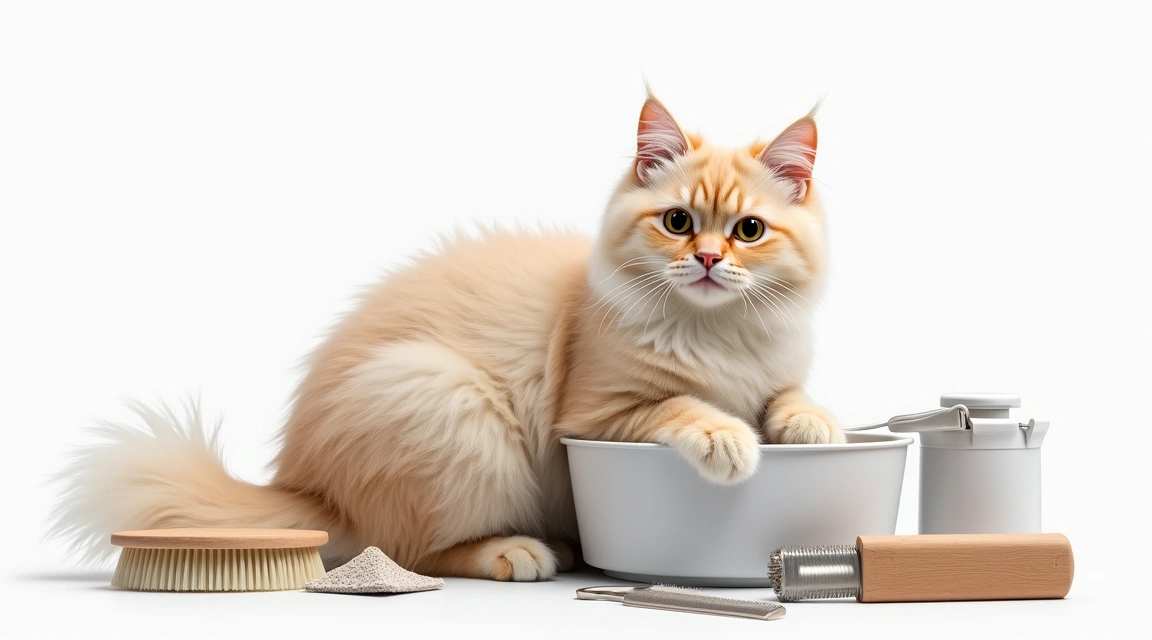
Start by brushing your Persian thoroughly before the bath. Wet matted fur becomes impossible to detangle and can pull painfully at the skin. Use a slicker brush and a metal comb to work through any tangles. This step alone cuts your bath time in half.
Set up your bathing station ahead of time. You’ll need a gentle cat shampoo, a cup for rinsing, several towels, and maybe a helper if your cat’s a wiggler. Fill the sink or tub with just 2-3 inches of warm water before bringing your cat in. The sound of running water can freak them out. Wet the coat gradually, starting from the neck down, and avoid getting water in their ears and eyes. Lather gently, rinse thoroughly (leftover shampoo causes itchiness), and wrap them in a towel immediately.
Drying is just as important as washing. Most Persians won’t tolerate a hair dryer, but if yours does, use the lowest heat setting and keep it moving. Otherwise, towel-dry as much as possible and let them finish air-drying in a warm, draft-free room. Brush again once they’re mostly dry to prevent new mats from forming as the coat dries.
What to Expect as You Establish a Bathing Routine
Your first few baths might feel like an Olympic event. That’s normal. Cats are creatures of habit, and introducing something new takes patience. Some Persians never fully embrace bath time, but most get used to it enough that it’s no longer a traumatic experience for either of you.
You’ll start noticing patterns. Maybe your cat’s coat looks greasy around the 5-week mark. Or maybe they develop tiny mats behind their ears at week 6. These signals help you dial in the perfect schedule. And here’s something encouraging : regular baths often mean less shedding around your house because you’re removing loose fur during the bath instead of letting it fall all over your couch.
Bathing your Persian isn’t about being obsessive or high-maintenance. It’s about keeping them comfortable and healthy. Their coat is beautiful, but it’s also high-upkeep. When you find the right bathing frequency for your individual cat and make the process as calm as possible, you’re setting them up for a lifetime of good coat health. And honestly? A freshly bathed Persian is one of the fluffiest, most huggable creatures on the planet. Worth the effort every single time.
Editorial Tips & Advertising Inquiries : cats@steeplechasecattery.com
📖 Related Articles