
White Persian cats are stunning. There’s no other way to put it. Their snow-white coats and copper or blue eyes make them one of the most recognizable and sought-after cats in the United States. But here’s the thing: owning a white Persian isn’t just about admiring their beauty from across the room. These cats require dedicated grooming, attention to health quirks, and a real understanding of what makes them different from other color varieties.
I’ve worked with white Persians for years, and honestly, they’re some of the most rewarding cats you can bring into your home. They’re calm, affectionate, and surprisingly playful when the mood strikes. But they also come with responsibilities that first-time owners don’t always expect. If you’re considering adopting a white Persian or you already share your life with one, this guide will walk you through everything that matters.
The Unique Background of White Persians

White Persians aren’t a separate breed. They’re a color variation within the Persian cat breed, which has been refined over more than a century of careful breeding. The solid white coat is caused by a dominant gene that masks all other color genes, resulting in that pristine, uniform appearance. What’s fascinating is that white Persians can have different eye colors: copper, blue, or even odd-eyed (one copper, one blue). Each variation has its own charm, but blue-eyed and odd-eyed whites come with a higher risk of deafness.
The gene responsible for white coat color is also linked to congenital deafness in some cats. Studies show that around 17-22% of white cats with non-blue eyes are deaf, while that number jumps to about 40% for blue-eyed whites. Odd-eyed whites may be deaf in the ear on the blue-eyed side. This doesn’t mean every white Persian will be deaf, but it’s something to be aware of when choosing a kitten or caring for an adult cat. Reputable breeders test for hearing issues early and can guide you through what to expect.
What It’s Really Like Living with a White Persian
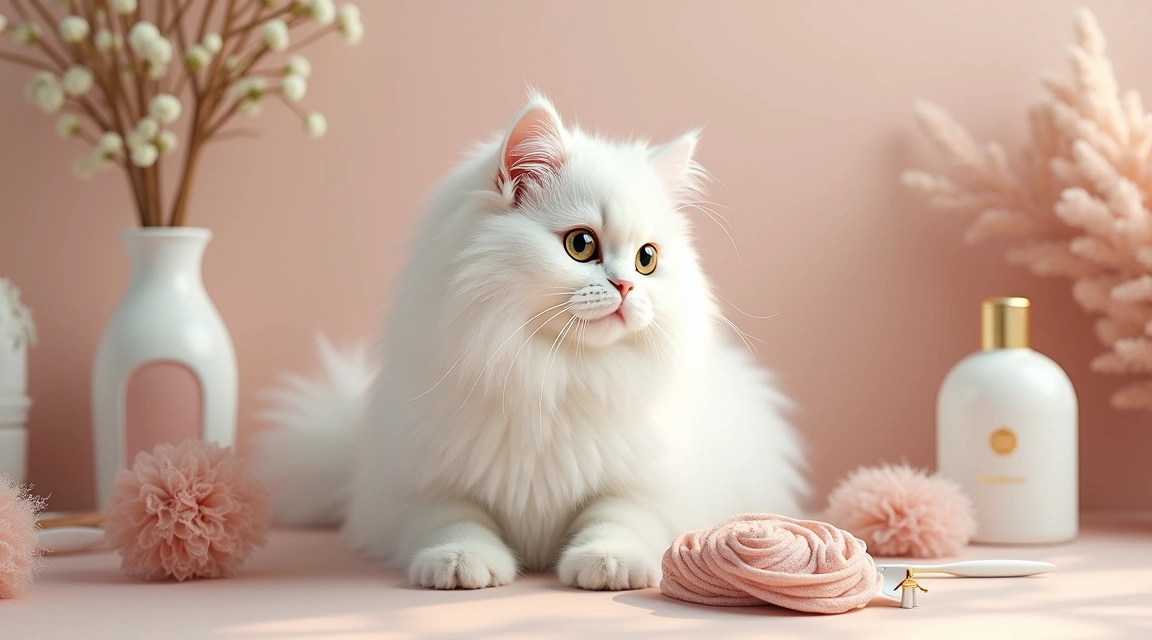
White Persians have the same gentle, laid-back temperament as other Persian color varieties. They’re not climbers or troublemakers. Instead, they prefer cozy spots, predictable routines, and plenty of human interaction. They’ll follow you from room to room, settle onto your lap during movie nights, and greet you at the door with a soft chirp. They’re not loud cats, but they communicate clearly through body language and those big, expressive eyes.
One thing owners notice immediately: the grooming demands. A white coat shows every speck of dust, every tear stain, every bit of litter tracked from the box. You can’t skip a day and hope it’ll look fine. Daily brushing is non-negotiable if you want to prevent mats and keep that coat looking pristine. And let’s be honest, if you’re not prepared for regular baths and eye cleaning, a white Persian probably isn’t the right fit. These cats need owners who enjoy the grooming process or at least don’t mind dedicating 15-20 minutes a day to coat care.
Health Considerations Specific to White Coats
White Persians face the same brachycephalic (flat-faced) health concerns as all Persians: breathing difficulties, dental crowding, and tear duct issues. But the white coat adds a layer of complexity. Tear staining is far more visible on white fur, which means you’ll need to clean around the eyes daily with a damp cloth or a veterinarian-approved solution. Left unchecked, those reddish-brown stains can become stubborn and even lead to skin irritation.
Sun sensitivity is another factor. White cats, especially those with pink skin around the nose and ears, are more prone to sunburn and, over time, sun-related skin issues. If your white Persian has access to sunny windowsills or outdoor enclosures, you’ll want to monitor exposure and consider pet-safe sunscreen for nose and ear tips during peak UV hours. Indoor living is almost always the safer choice for white Persians, not just for sun protection but for overall safety and coat cleanliness.
Deafness, as mentioned earlier, isn’t a given but it’s more common in white cats. If your cat is deaf, they can still live a full, happy life. You’ll just need to adapt: use visual cues instead of voice commands, keep them indoors to avoid traffic and predator risks, and be mindful not to startle them. Deaf cats are often more visually attuned and can learn hand signals quickly. It’s not a limitation, just a different way of communicating.
Practical Grooming and Care Tips
Here’s where real-world experience matters. White Persians need daily brushing with a stainless steel comb, not just a slicker brush. Start at the head and work backward, paying close attention to the armpits, belly, and behind the ears where mats form fastest. A detangling spray can help, but the key is consistency. Miss a few days and you’ll be dealing with knots that require professional help or even shaving.
Bathing should happen every 4-6 weeks, or more often if your cat has tear staining or gets into something messy. Use a gentle, cat-specific shampoo (whitening formulas can help maintain brightness, but avoid harsh chemicals). After the bath, blow-dry on a low, cool setting while brushing to prevent mats from forming in damp fur. It’s a process, but it’s also bonding time if you approach it calmly and patiently.
Eye care is daily work. Use a soft, lint-free cloth dampened with warm water (or a tear stain remover recommended by your vet) and gently wipe from the inner corner outward. You’re not scrubbing, just lifting away moisture and debris before it oxidizes and stains. Some owners find that switching to stainless steel or ceramic bowls reduces tear staining, as plastic can harbor bacteria that irritate sensitive eyes.
What to Expect When Adopting a White Persian
If you’re adopting from a reputable breeder, expect to pay anywhere from $1,200 to $3,000 or more depending on pedigree, eye color, and breeder reputation. White Persians, especially those with blue or odd eyes, are often in high demand. A good breeder will provide health records, a hearing test certificate, and proof of vaccinations. They’ll also be willing to answer questions about the kitten’s parents, temperament, and any known health issues in the line.
Adopting an adult white Persian from a rescue is another wonderful option. Many Persians end up in breed-specific rescues due to owner lifestyle changes, not behavioral problems. Adult cats often come already spayed or neutered, with known personalities and grooming habits. You’ll skip the kitten chaos and go straight to a calm, affectionate companion. Just be sure to ask about grooming history and any special needs, especially if the cat is deaf or has chronic tear staining.
Once your white Persian is home, set up a grooming station with all your tools in one place: comb, brush, nail clippers, eye wipes, and a towel. Make grooming part of your daily routine from day one. The earlier you start, the more accepting your cat will be. And honestly, most Persians enjoy the attention once they realize grooming means quality time with you. It’s not a chore, it’s a ritual.
White Persian cats are breathtaking, affectionate, and deeply rewarding for the right owner. They’re not low-maintenance, but if you’re willing to invest time in grooming and health care, you’ll be rewarded with a loyal, loving companion who turns heads wherever they go. Just remember: the beauty you see in photos is the result of daily care, not magic. If you’re ready for that commitment, a white Persian might be the perfect addition to your home.
Editorial Tips & Advertising Inquiries : cats@steeplechasecattery.com